

The WhatsApp Auditor
AI-empowered citizenry driving government transparency
The mayor stood at the podium, confident that the thick stack of papers in front of him was an impenetrable shield. In rural Brazil public transparency existed only as a “brick of paper”—a labyrinth of jargon and forensic accounting. If a citizen couldn’t parse a thousand-page ledger, they couldn’t see the missing funds for a local school or the inflated invoice for a road that was never paved.
In these municipalities, the state relies on a monopoly of interpretation. The government produces documents that require a specialist to understand, effectively silencing the average voter through “weaponized confusion.” This friction isn’t an accident; it is an intentional barrier. When data is technically public but practically invisible, accountability is impossible.
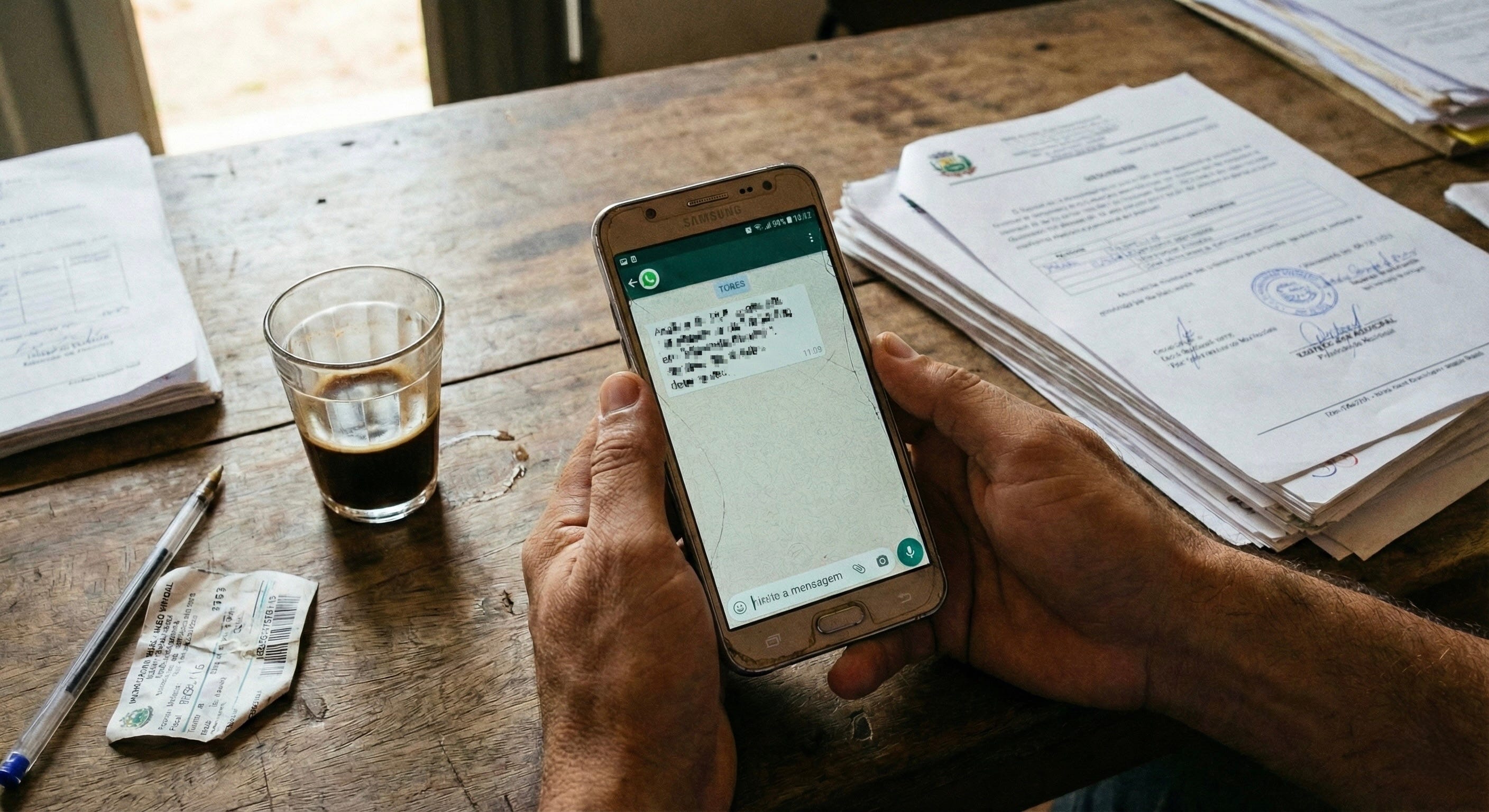
The change didn’t come from a new law or a government reform. It started when local leaders stopped waiting for official explanations and turned to large language models.
The mayor fekt the power dynamic shift. From the back of the room, a community leader raised a smartphone.
Instead of squinting at blurry PDFs, they began feeding these bureaucratic puzzles into AI bots via WhatsApp—the region’s digital lifeline. These tools don’t care about jargon. They don’t get tired of reading spreadsheets. In seconds, they cross-reference government expenditures against real-world outcomes. It’s a high-level intelligence performing a very old, very human task: making sure the person given important responsibility isn’t stealing.
You no longer need to be a coder or a forensic auditor to hold the powerful to account. You only need the curiosity to ask the right question and the tool to bridge the gap between raw data and actionable insight. It is messy, unofficial, and highly effective.
Further reading: Can generative AI make public finance truly accessible? by Eduardo Araujo @ https://www.bsg.ox.ac.uk/blog/can-generative-ai-make-public-finance-truly-accessible